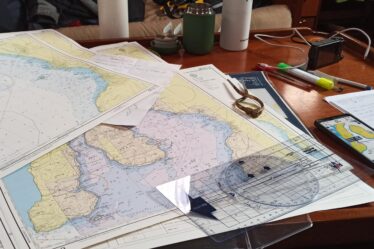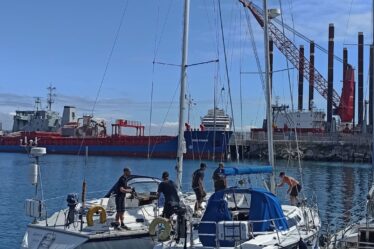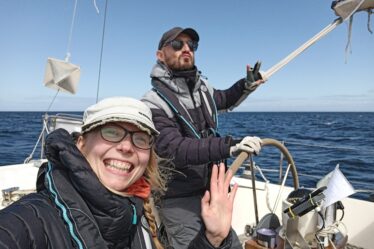
Little did we know when we hauled out at the end of July, that we wouldn’t be heading back into the water until April the following year. Nor did we realise all that was yet to unfold over the coming months, had we known, we would likely have made different choices. Although we faced many trials and tribulations that tested us to, and beyond, our limits I don’t regret the journey that we took to get there. Not a chance I would do it again, but boy did we learn a lot!
So, just in case you ever get the urge to buy a boat, I’m going to share with you some of the harshest and most important lessons we learnt.
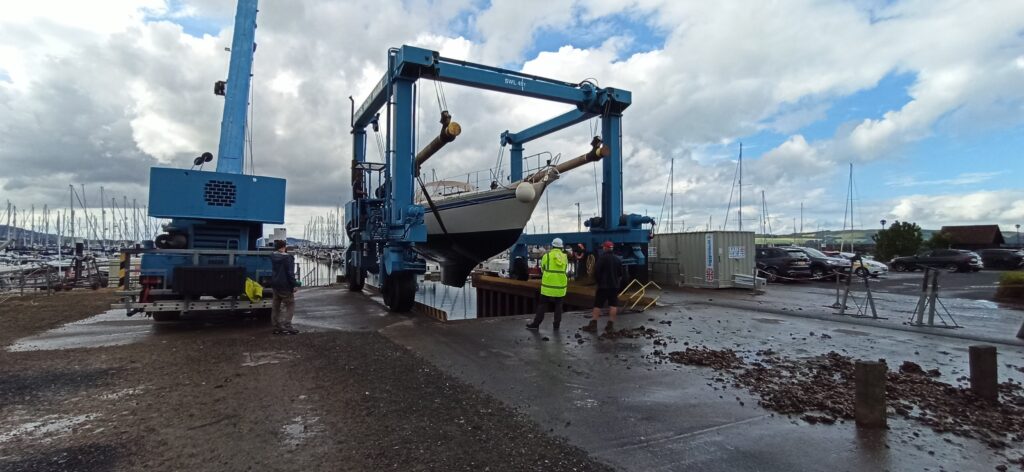
Lesson 1: Don’t haul out in a damp and rainy climate
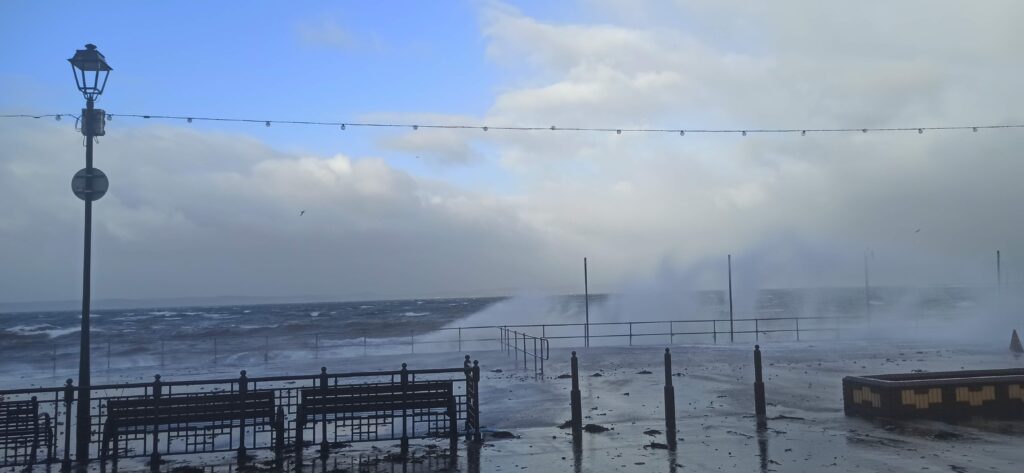
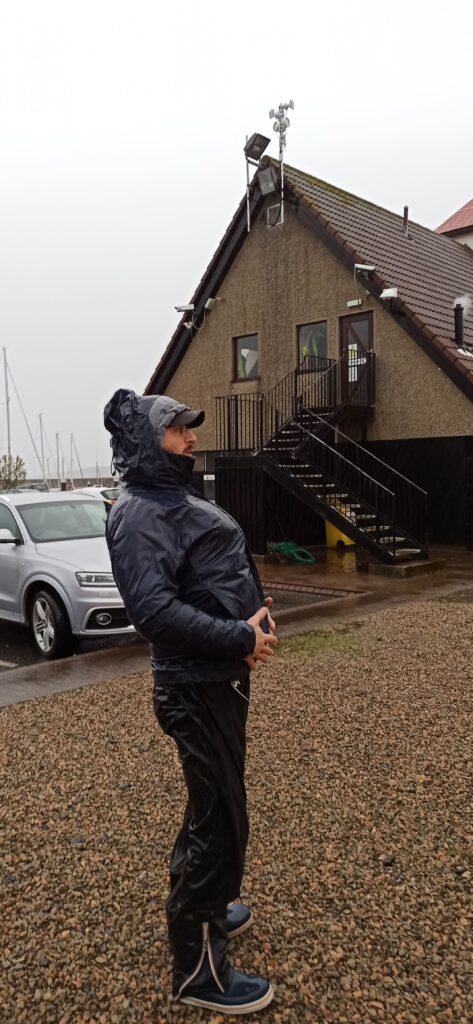
The west coast of Scotland happens to be the dampest, rainiest, windiest place I have ever stayed for a prolonged period. When we first took the boat out of the water in summer the weather was still fair, and we didn’t have so many wet days. But due to the amount of work we ended up doing and the amount of time we had to spend researching each step, we were soon faced with dull, damp days. This was ok for some internal jobs, but we also wanted to do things such as changing seacocks and fixing leaks.

Lesson 2: Prioritise job order based on the weather
We had a few big jobs to complete, all of which took us much longer than we’d hoped as we needed time to understand what we were doing, or we realised we were missing a required tool, or we were trying to use the wrong tool (or all of the above!).
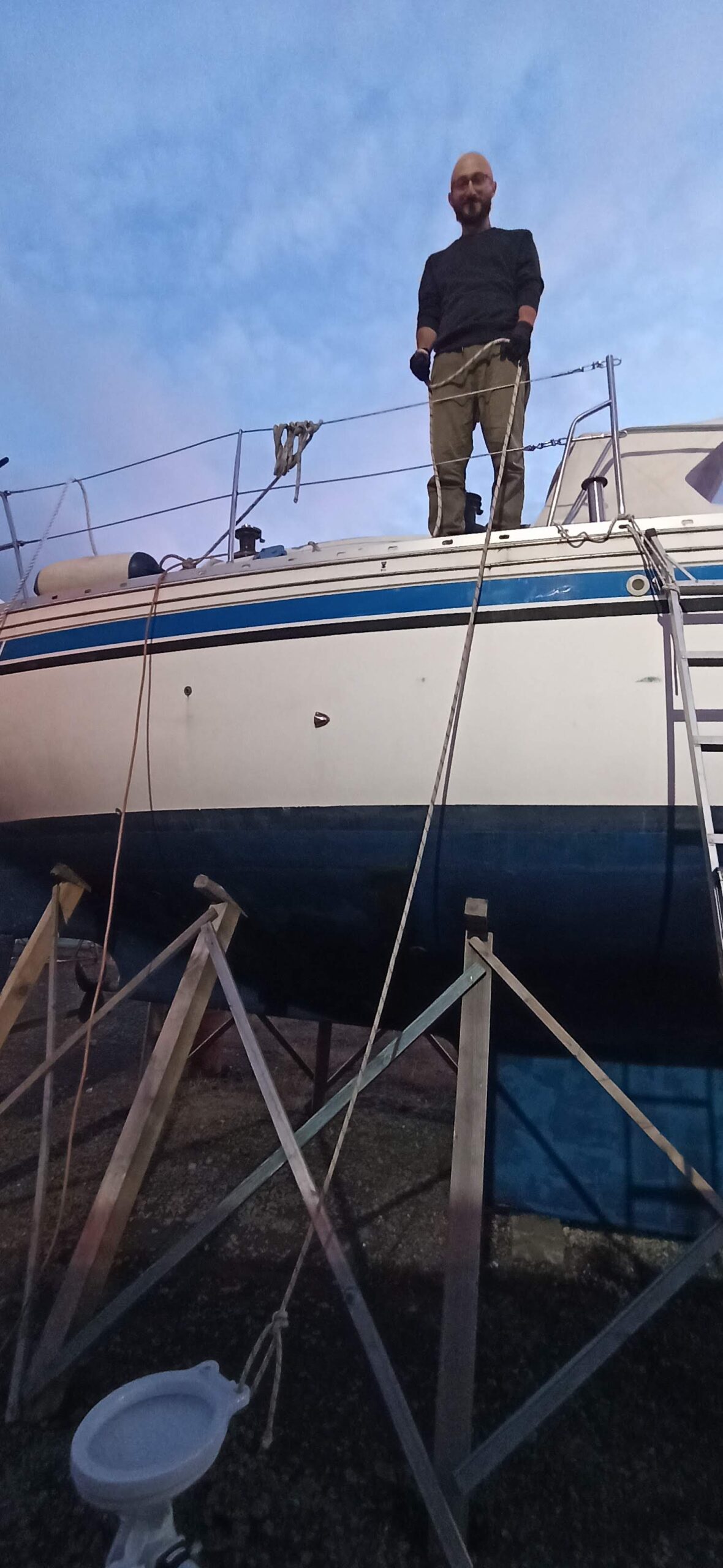
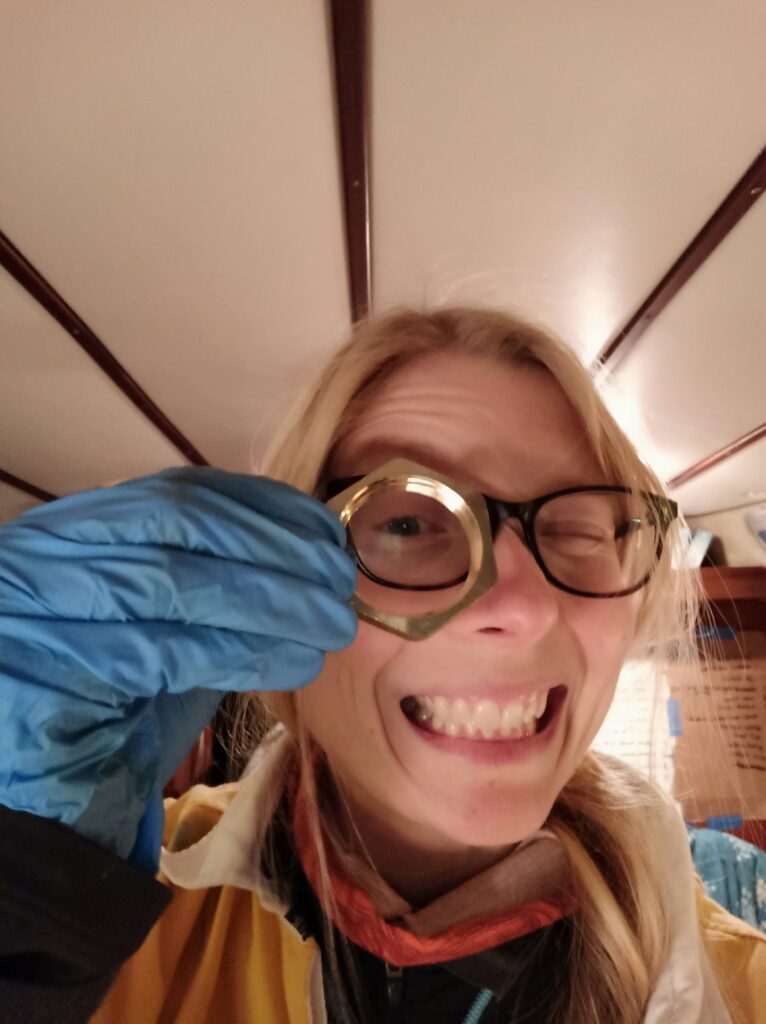
Miki successfully removed all seacocks we planned to change, with a little guidance on the technique from a helpful neighbour. We then completed a much larger job of closing three thru-hulls (holes in the boat, originally made for the seacocks) that we no longer needed. It was a daunting task as it meant making changes to a part of the hull that is under the waterline and if it wasn’t done correctly, or made strong enough, then this could be a potential weakness in the future. This was done on one of the last sunny days of the summer as we needed no rain and the warmth from the sun to enable the fibreglass to cure correctly. We were given confidence in our work when our neighbour (a marine engineer who regularly completes such jobs) gave us the nod of approval.
What we should have also concentrated on during this period were the leaks, fitting the other seacocks, and repairing some damage to the bottom of the keel. These were all tasks that would either stop us from returning to the water or that couldn’t be done when it rained. A lot of our efforts were instead focused on work inside the boat, which retrospectively, could have been the work we then did when winter took hold.
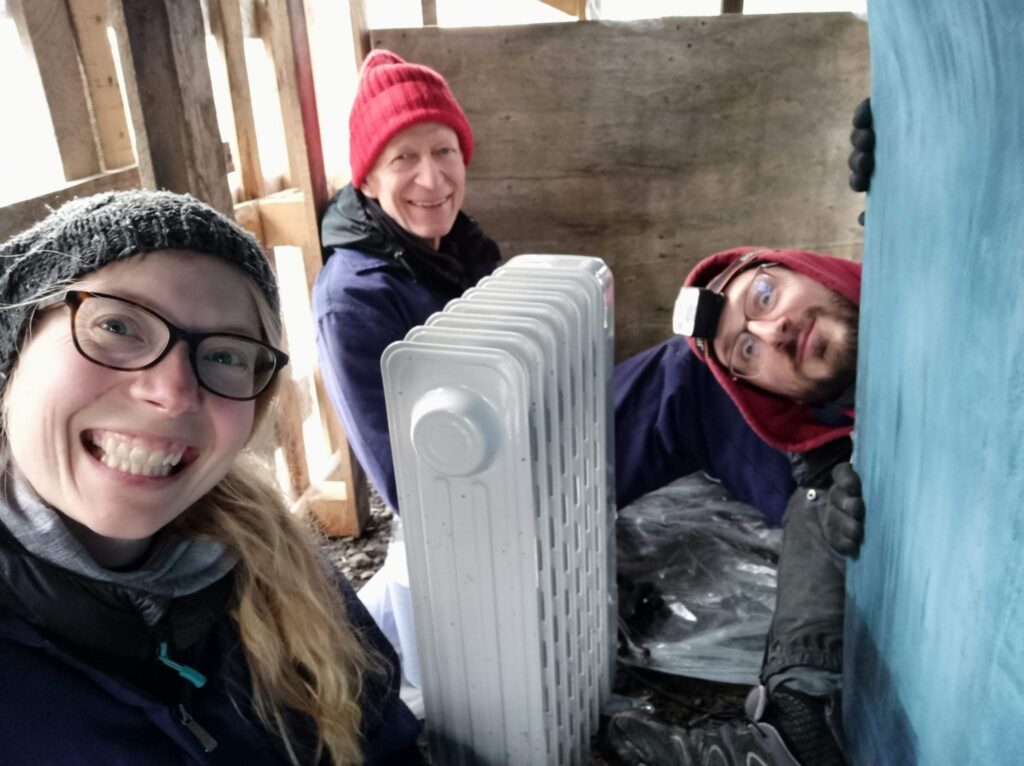
A big thank you is due to my dad, who came up in February to battle the wind, rain, and hail to create a solid, water-deflecting structure around our keel enabling us to work on it whatever the weather.
Lesson 3: Do only the necessities, to begin with
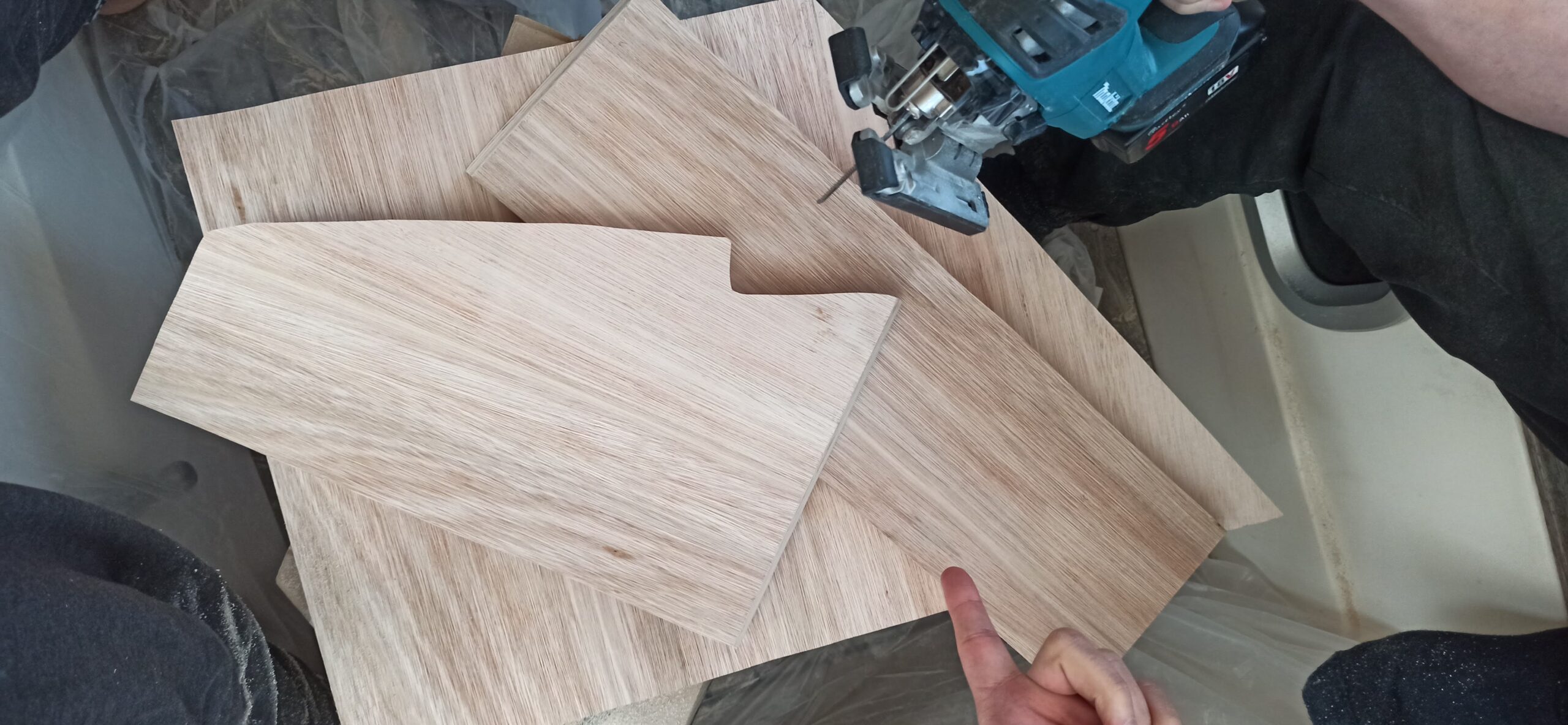
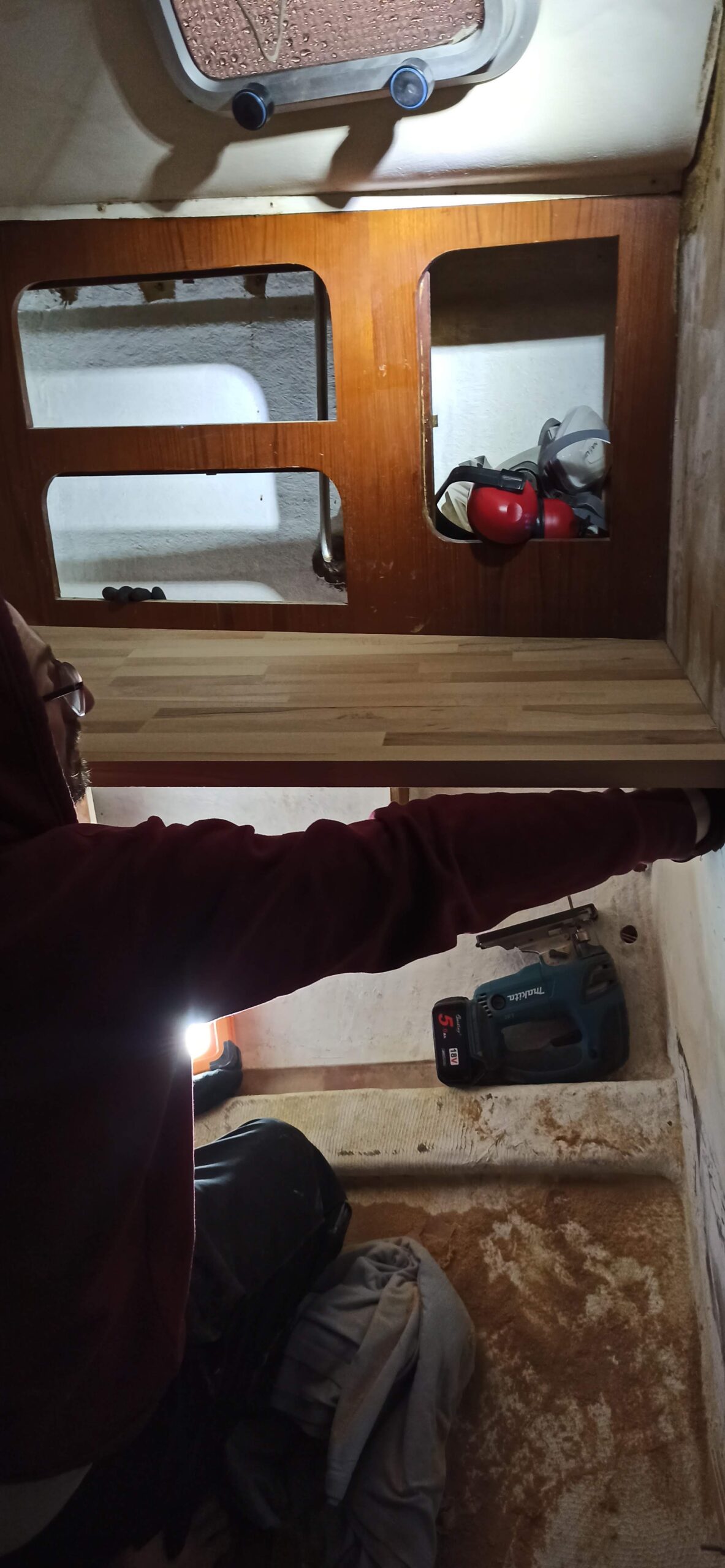
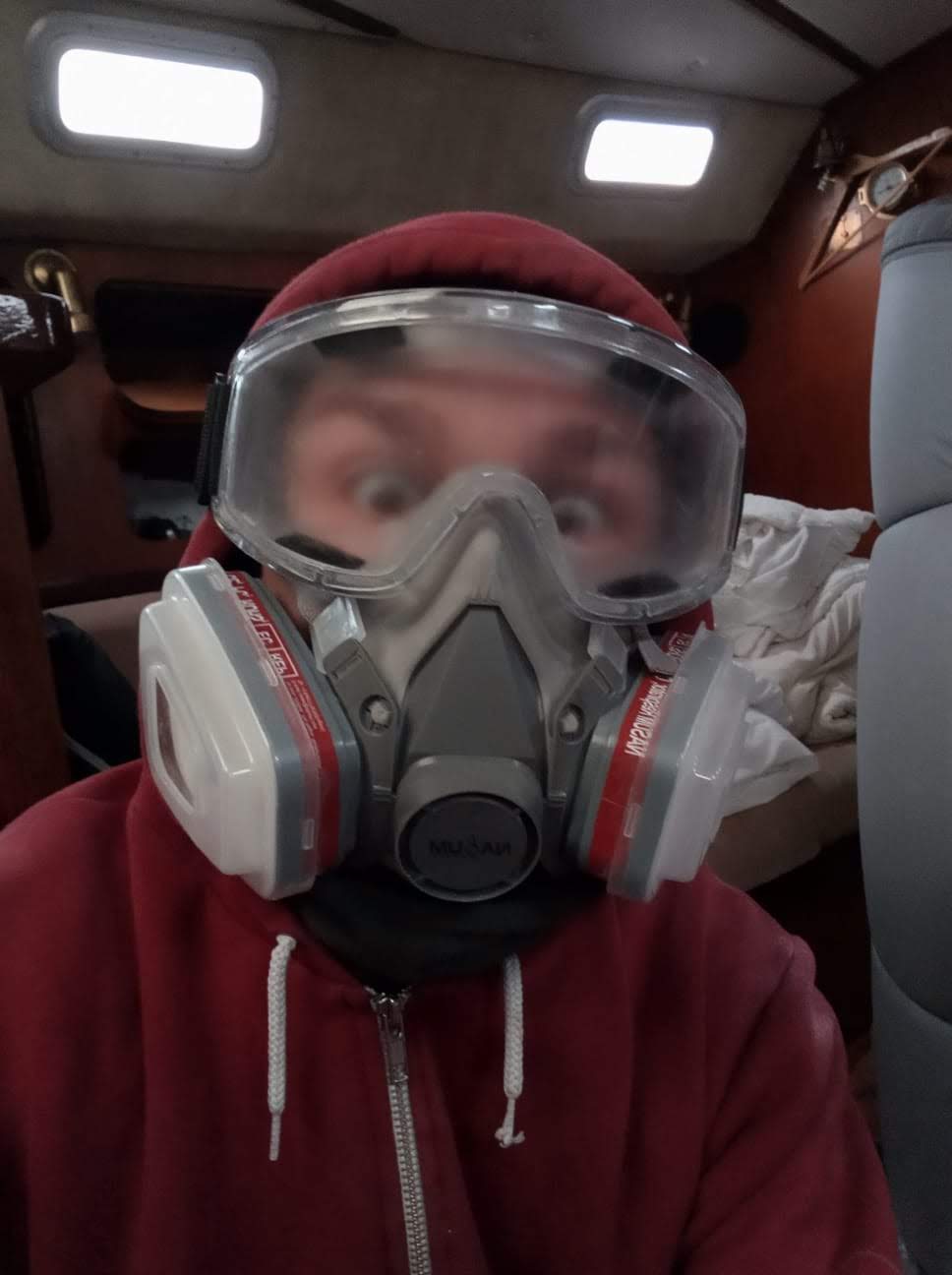
During our seacocks inspection and removal, Miki noted that a large portion of the wooden cupboard in the aft heads was rotten. This toilet also had a holding tank, with piping that leaked, and thus didn’t have the most pleasant of smells. We had decided we would like to get a compost toilet on board (yes, this is a viable option for a sailboat), and remove the stinky holding tank. What we quickly learned through our DIY journey, was that nothing was ever as simple as you might expect (or at least hope for) and anything you do is likely to lead to another job. This is how we went from the comparatively minor work of changing seacocks to staring into an empty shell of a room amid a full heads refurb…
Was it all necessary work at this time? No, not really. Could we have got back in the water months earlier if we hadn’t taken so much apart? Quite possibly. Did the aft heads look great when we’d finished? Most definitely. But it was a tough sacrifice of time we could (possibly) have spent on the water, improving our sailing and enjoying one of the most joyous parts of boat life – being able to wake up in one location and go to sleep in another without ever leaving your home.
Lesson 4: If you’re going to live on a boat in winter, make sure it’s winter ready
Living on a boat, it turns out, is much like living in a van. Though I’ve never lived in a van, I think the issues of condensation and dampness are more commonly known and expected elements of that lifestyle. Boats have the same issues, especially when you are in a damp climate. Through the summer we didn’t have any problems, but as autumn drew in things began to change. Fast.
We were suddenly dealing with an increasing amount of mould on the backs of cushions, on the inside of the hull and on the carpets (not on the floor, but on the walls around the windows).
– Bonus lesson: don’t get a boat that has carpet on the walls –
We began to see dust bugs appearing in the cupboards and around the carpets. The aft cabin, where we’d been sleeping became unliveable. To move away from the bugs we could see in the bedroom and to try to save our foam mattress, we began to sleep in the saloon. We rolled up the mattress, threw out the original aft cabin cushions, and removed the carpets from the walls. Possessions were also removed from cupboards all over the boat, and our clothes were put into vacuum bags in the hope they would make it through the season.
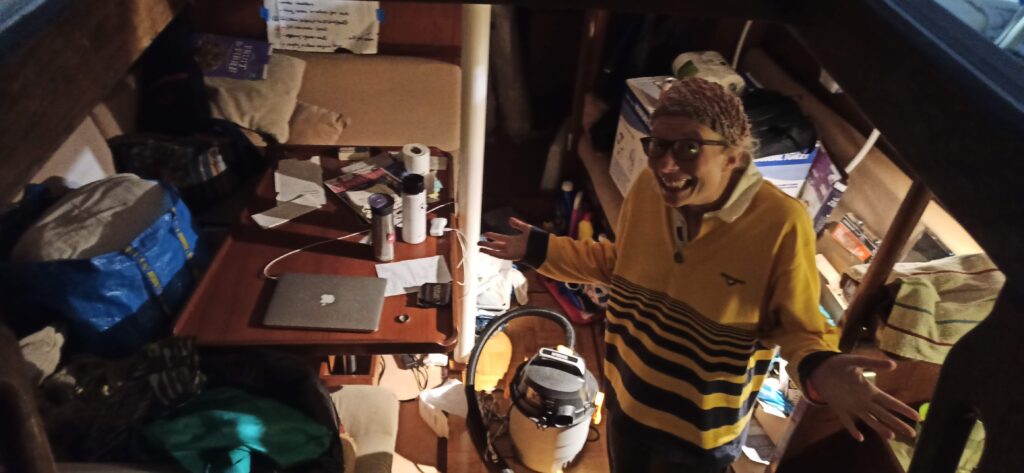
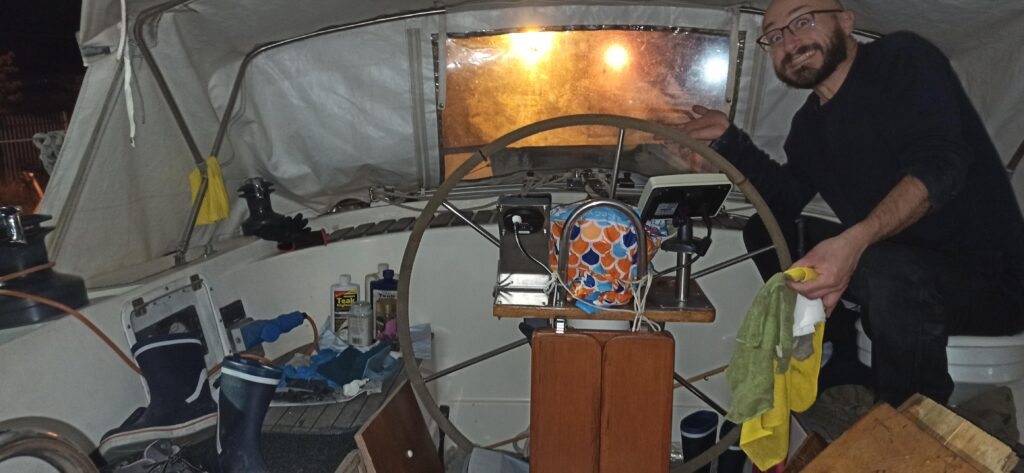
From October to the end of November we lived, slept, ate, and worked in the central space of the boat (this comprised the galley, the saloon and the navigation area). The rooms in the aft were now all in a state of refurbishment, the fore cabin had become a storage area. If you’re wondering about the toilet situation in all of this, we had to walk 5 minutes across the boatyard to reach the marina toilets and showers. So we could often be seen dashing through the wind and rain to make our call!
It was towards the end of November that we decided we could take it no more. We, luckily, managed to find a flat in the centre of Largs where we stayed during the remainder of our boat maintenance.
Lesson 5: Don’t lose focus
Sit down and make a plan, what jobs can you do when you’re back in the water? What jobs do you need to be out of the water to do? Any jobs that can be done in the water, do them in the water! This will give you freedom of movement and make life feel a little lighter. The seemingly small change of being able to wee in a toilet without putting on a coat and shoes should not be underestimated.
Lesson 6: Don’t expect too much from yourself
In our many moments of despair, we would hope that everything would soon be over and the boat be back in the water. We gave nearly every spare moment when not working or studying, to working on the boat. Many evenings while we were still staying on board, we would stand up from our day jobs and immediately change into dirty work clothes, ready to begin our ‘second jobs’.
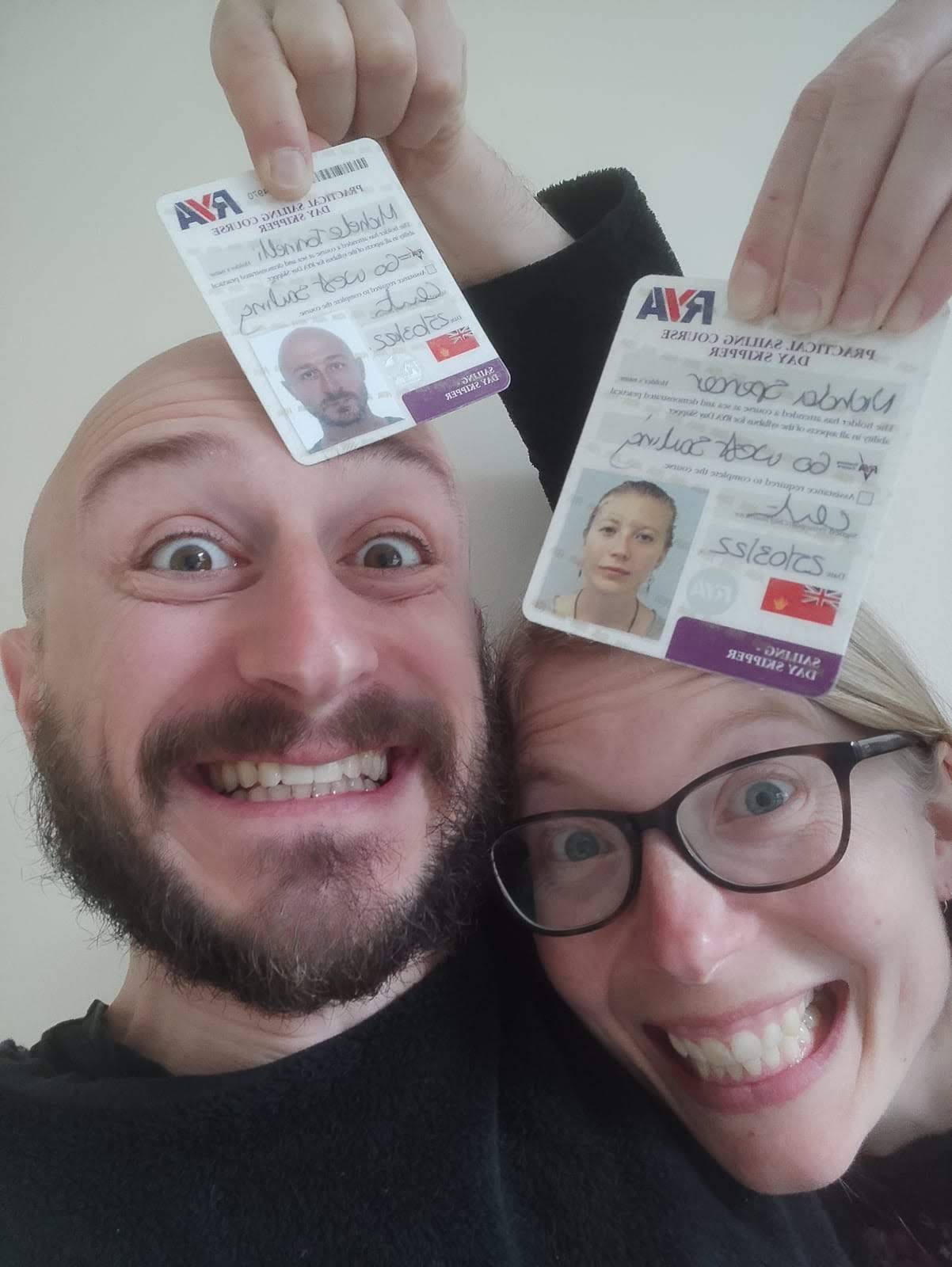
We also managed to complete our Day Skipper Theory course throughout October, dedicating our weekends to that task. Then the following March we achieved our Day Skipper practical, and received official licences to prove it.
What was often hard to remember and appreciate was that less than a year previously we hadn’t had a boat, we hadn’t known what seacocks were or that there were different types of keel, as well as an unfathomable amount of other information we have since absorbed. We’d never really sailed before and we had no idea about how to navigate. By the time we reentered the water in April, we had gained knowledge in all of these areas.
Lesson 7: Don’t rush into buying a boat…
…but if you do rush, accept it will take you some time to learn about everything and, going back to lesson one, don’t haul out in a rainy climate as it will make any maintenance process even longer and more painful!
All that being said, listen to your heart. Dive in head first if the mood takes you because as rough a ride as the past year was, we wouldn’t know half as much about boats – what to look out for maintenance-wise, what we like and don’t like, etc – if we hadn’t done what we did.
If you would like to see some more images or videos head over to our Instagram or YouTube.