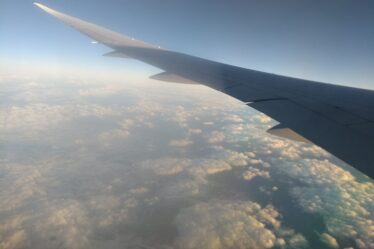
Our time in Italy was cut short due to the looming Brexit deadline. We discovered in mid-November it would be much easier for Miki to stay for a longer period in the UK if we arrived before 11pm on 31st December 2020. So bags were packed, notice was given at the flat in Genova, and after a few days spent with his parents, we were heading back to the UK. This time by plane and without bicycles.
At that time I had begun my accountancy studies and was looking for a job within the accounting industry. We were moving back to help me achieve this goal. Though my heart and soul were not ready for office life, I was willing to make the sacrifice of a few years to give me more stability and freedom in the long term. Luckily, I eventually found remote accounting roles that still give me freedom of location.
Miki also found a remote job, though with an optional office based in Manchester, and so we decided to move there to begin with. This had the added benefit of being close to my family so I could see more of them while back in the UK.
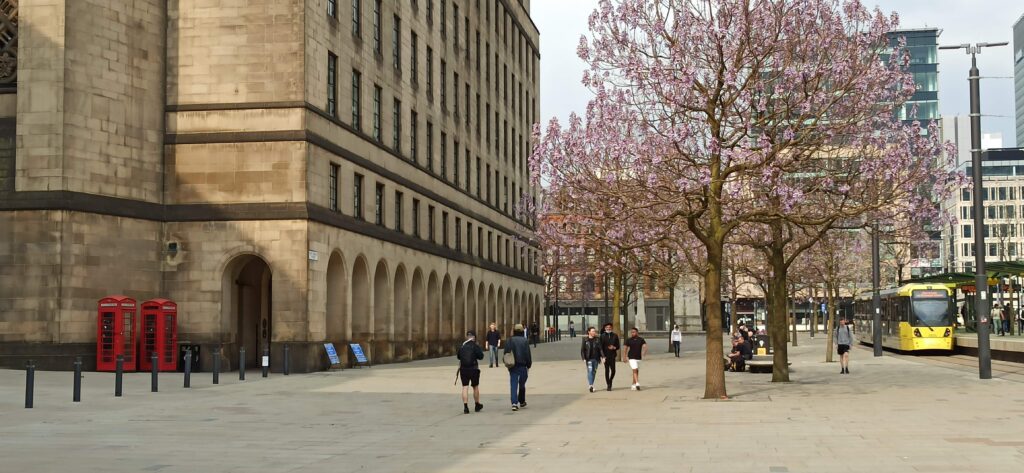
We stayed in Manchester for 6 months. Living in a part of the city I’d never spent much time in meant we were both able to explore, enjoying relaxing areas along the canal, and even some Roman history. Yet while we were able to enjoy certain aspects there was still a level of lockdown at this point due to COVID, meaning we didn’t experience the city as it normally is.

Some months prior to Manchester, we had both settled on the idea of living on a boat. What kind of boat took some deciding (the choice was quickly narrowed down to trawler or sailboat), with the sailboat eventually winning out with its’ romanticism and sustainable draw. This was why we had chosen to move to Genova – to be nearer to the water and begin our boat education in some way. Manchester isn’t by the sea but is just a train ride away from Liverpool.
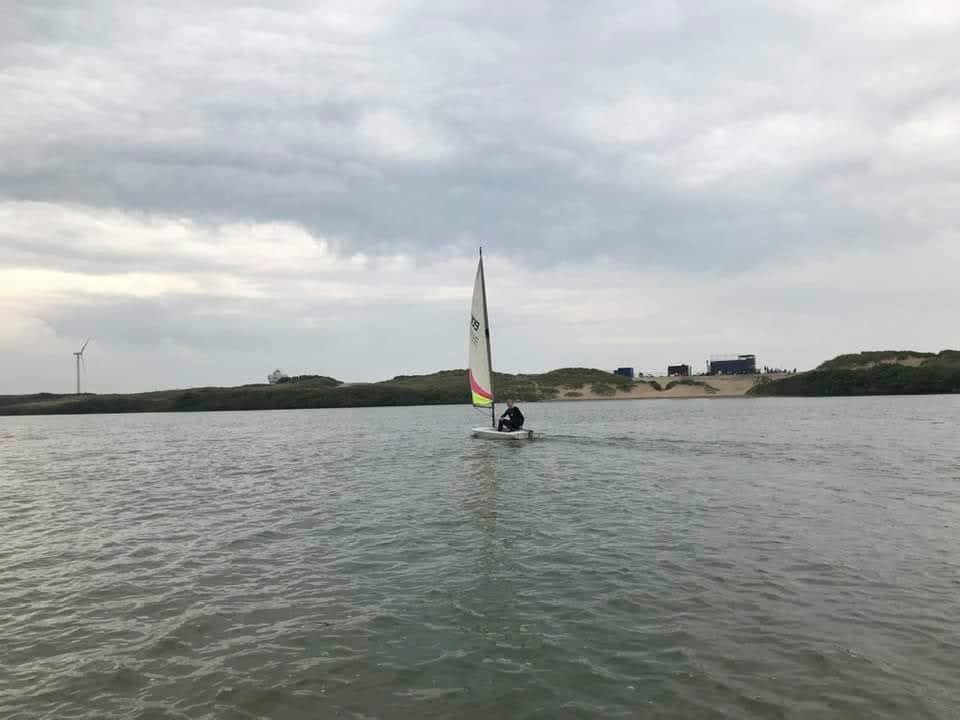
Our lockdown days were spent between work, study (for me), a little exercise, and boat research. We joined Liverpool Yacht Club, which turned out to be the best possible move. The club is full of welcoming, friendly people, happy to help us begin our adventures on the water. We soon had the opportunity to experience both dinghy and full-sized sailing, for the first time in either of our lives.
As we neared June we were at a crossroads, looking both for flats in the southwest of England (towards the largest boat markets in the UK), and continuing our search for boats. Maybe, if we found one in time, we could move straight from Manchester onto a boat…
That, it turns out, is just what we did.
At the end of June we hired a car, packed up everything in our Manchester flat, said goodbye to the friendly old lady who lived below us, and drove east to my brother’s wedding. We arrived at the hotel with a car so full opening the doors was very risky business as you couldn’t be sure what might try to jump out at you. The majority of the space it has to be said was taken up by our foam mattress, which we’d had to buy as a replacement for possibly the worst mattress in the world provided by our Manchester landlord. But I digress…
After a wonderful weekend celebrating my brother and (now) sister-in-law’s wedding, we continued on our way. This time heading north. The boat we had decided to buy, was moored in Largs, Scotland, and we were travelling there with nearly all of our worldly belongings to move straight on board. We wouldn’t be setting sail immediately (largely due to our lack of ability in the sailing department), but the excitement was still at an all-time high. We were buying a boat, and we were moving on board! It was, in my eyes, the ultimate dream. A little more stability, having a home where I could keep belongings and live out of a backpack no longer, yet still with the ability to travel. Best of all, we would be travelling by the power of the wind.
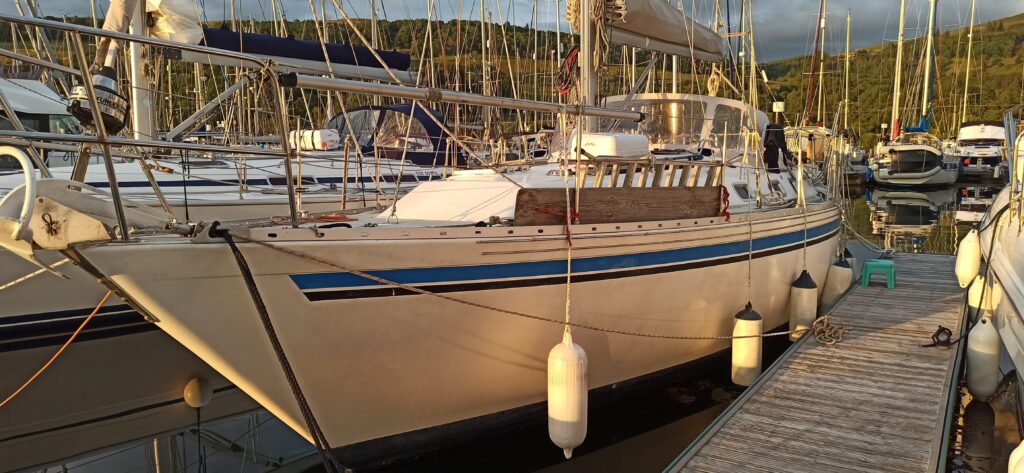
The yacht is a 37ft (11.3m) Colvic Countess. She is a beamy vessel, meaning she’s quite plump around the middle with a similar physique to a whale. Older than many other boats in the marina, having been produced in 1989, the hull and deck are more an offwhite, where once they used to be white. We had chosen a centre cockpit, giving us an aft cabin (back bedroom) which you enter through a narrow, low-roofed corridor passing by the navigation table – a tucked-away little area where you can plot your voyages and make pretend calls on the (no longer working) old radiotelephone. Unless of course, you would like to jump down through the ‘shed’ (a narrow room on the starboard side which hosts the gas canisters and boiler) and pass through the aft heads (back bathroom). The main entrance takes you into the galley and saloon, with a view straight down to the fore cabin.
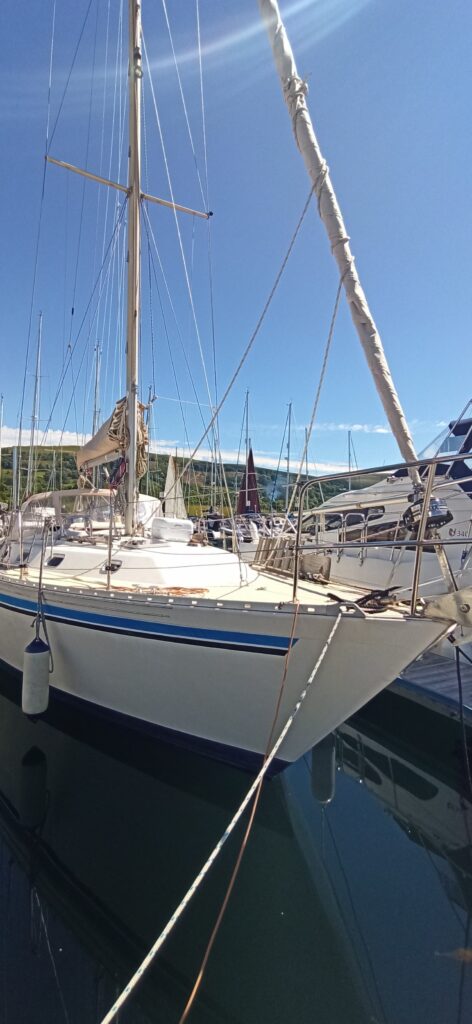
Diary notes from some of the first days aboard

Wednesday 30th June 2021
We are both continuing to work, and so sitting at different desks on board. Miki is at the navigation table, me in the saloon. When there is a stronger tide or wind, or when another boat in the marina is on the move, we begin to rock. An incredibly novel and thrilling feeling, sitting at your desk, wondering if you’ll begin to feel seasick trying to work in this new, bobbing environment.

Lying down to sleep at night, we stir easily with each new noise and movement. A rumbling late evening intrigues us enough to open our cabin hatch to pop our heads out like a pair of meerkats, curious to discover the source of the sound and the reason for our rocking.

Thursday 1st July 2021
Beginning to try and learn the anatomy of the boat, we frequently pull up the floor; peer into bilges; lift cushions; and peek into every possible nook and cranny available, of which there are many!
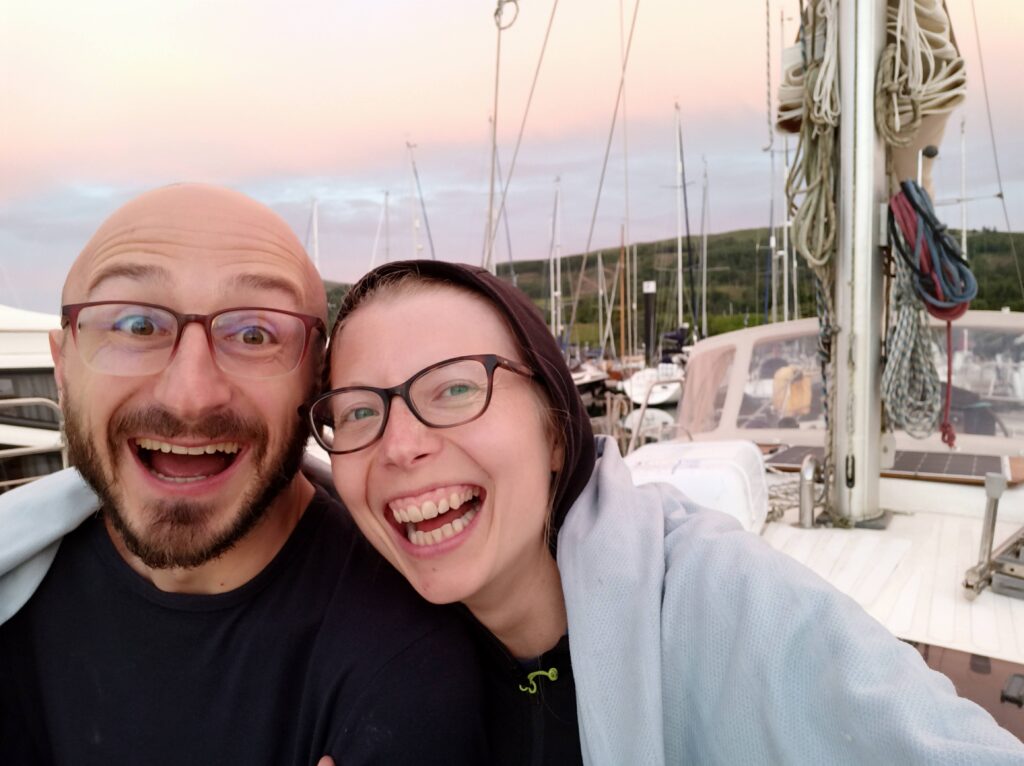
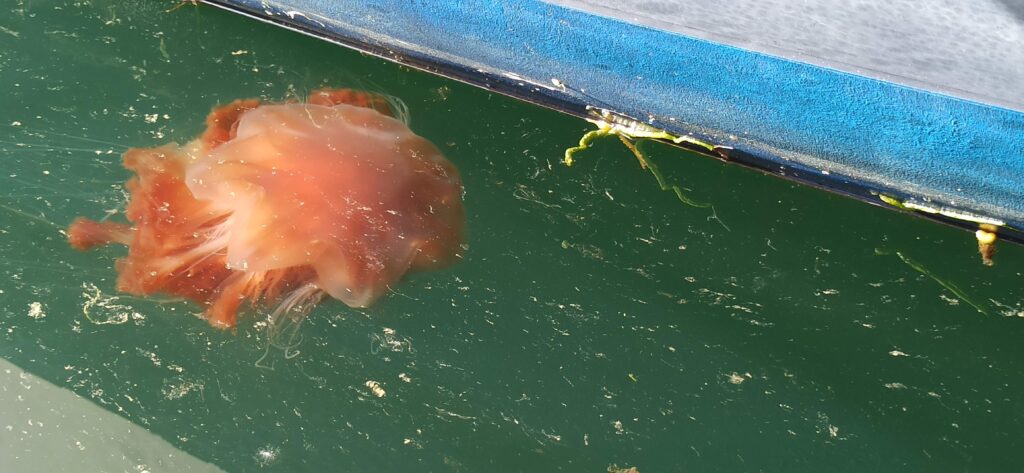
We were lucky to have found the boat in the middle of summer and to be on board in what was a surprisingly sunny season (for Scotland). Despite not being able to move, it was still enjoyable to watch other boats coming and going; and to see ducks on, and jellyfish in, the water. Towards the end of the first month, we completed two out of three competent crew weekends, the third feeling unnecessary thanks to what we had already learnt in Liverpool, and began to feel a little more comfortable with the sailing elements of our boat. We really appreciated the benefit of being able to finish a weekend course, only to head home and to review what we had learnt with real-life ‘tools’.
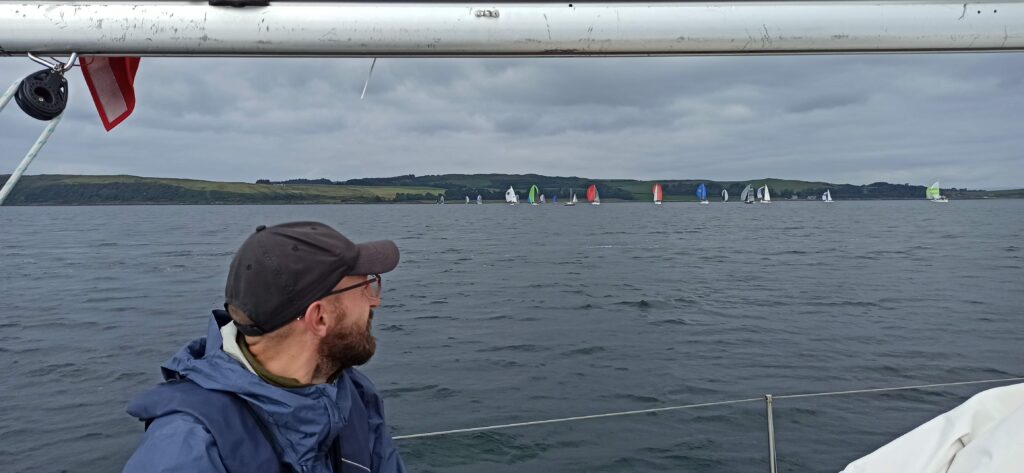
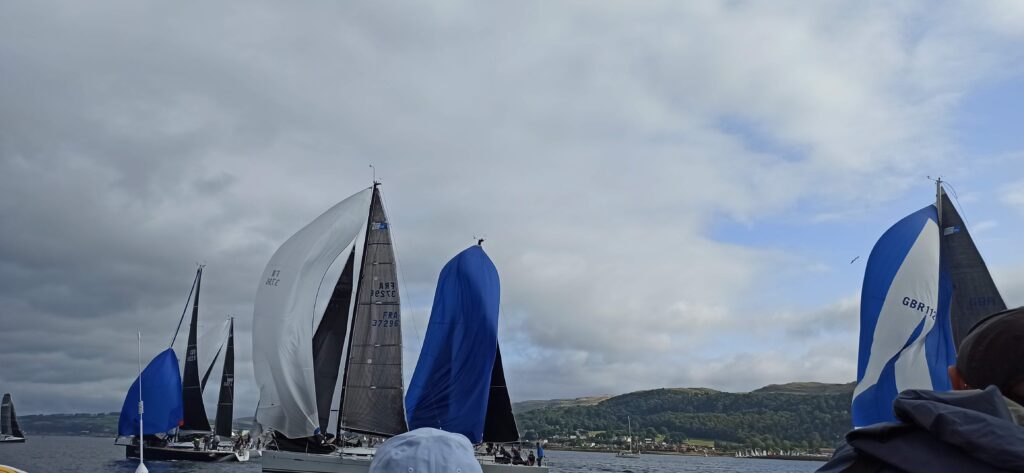
At the end of the summer, we made it out on the water for the Largs Annual Regatta Race. With the help of Fairlie Yacht Club, we’d found a boat that needed a crew. Quite excitingly for us, a boat which at the moment was without an engine. This was no problem for the pro owners, a lifelong sailor and his wife. We were towed out by another sailboat, and floated near the marina entrance on our return, hopefully awaiting a tow back in.
Though the winds weren’t particularly strong that weekend, throughout each day there were moments of thrilling sailing. The boat heeling to one side, all of us piled on the high side to even things out. The start on the second day was particularly memorable as the horn blasted and a fleet of spinnaker sails raised into the air with amazing synchronisation. We were in a different class to the boats with spinnakers, more enjoyable in my opinion as this meant we could relax and watch the spectacle, rather than looking around a little frantic, trying to be helpful and not get in the way at the same time.
After that first eventful month, we decided to haul out our boat and head to the boatyard. The insurance required certain work to be done in order to approve the cover, and we were also a little worried about a few of the seacocks which looked rather green due to oxidisation. The seacocks being the marine version of a stopcock, and thus a tap which opens and closes holes in the hull, it was a part of the vessel we felt we really should have confidence in. So began a different, less picturesque, segment of the boat owners’ life.